Thinking about building your own yacht? It’s a big dream, and a huge part of making it happen is figuring out the inside layout. The yacht floor plan is basically the blueprint for your floating home. It’s where all the magic happens, turning a big boat into a comfortable, functional, and stylish space on the water. We’ll explore what goes into designing this all-important plan, from the basic shape of the boat to all the little details that make it yours.
Key Takeaways
- The yacht floor plan is the core of your vessel’s design, dictating how interior spaces are arranged for both living and moving around.
- Balancing looks with how the yacht actually works is key; a beautiful yacht floor plan must also be practical.
- The shape of the yacht’s hull plays a big part in how the interior spaces can be laid out.
- Thinking about who will use the yacht and how will help decide the best layout, whether it’s for big parties or quiet getaways.
- Modern yacht floor plans are increasingly focused on being eco-friendly and adaptable to different uses.
Understanding The Yacht Floor Plan
The Foundation Of Your Floating Home
Think of a yacht’s floor plan as the blueprint for your home on the water. It’s more than just lines on paper; it’s the very structure that dictates how you’ll live, move, and relax aboard. The hull, the very base of the vessel, plays a massive role here. Its shape and size aren’t just about how the yacht cuts through the waves; they directly influence the interior volume and the potential layout possibilities. A deep, full hull might offer more space but could mean a slower ride, while a sleeker, shallower hull might be faster but limit interior volume. This foundational element dictates the overall footprint and potential of every space you’ll eventually inhabit. Understanding the hull type – whether it’s a displacement hull for steady cruising or a planing hull for speed – is the first step in appreciating how the floor plan will function.
Balancing Aesthetics With Functionality
Designing a yacht floor plan is a constant juggling act. You want it to look amazing, sure, but it also has to work. You can’t just cram in a giant living room if it means you can’t properly access the engine room or if it makes the boat unstable. Designers have to think about how people will actually use the spaces. Where will the main gathering areas be? How much privacy do the sleeping quarters need? What about storage for all your gear? It’s about making sure that the beautiful, luxurious feel doesn’t come at the expense of practical use. Every decision, from the placement of a door to the size of a window, impacts both how the yacht looks and how it performs.
Here’s a quick look at some common considerations:
- Flow: How easily can you move from one area to another?
- Light: Maximizing natural light can make spaces feel larger and more inviting.
- Access: Ensuring easy access to essential areas like the galley and heads.
- Views: Positioning key areas to take advantage of the surrounding scenery.
The Role Of The Hull In Layout Design
The hull is, without a doubt, the backbone of any yacht. Its design isn’t just about seaworthiness; it’s a primary driver of the interior layout. For instance, a wide beam hull, like those found on catamarans, offers a more stable platform and often allows for more expansive, open-plan living areas on a single level. This can create a feeling of spaciousness that’s hard to achieve on a monohull. Conversely, a narrower, deeper hull might offer better performance in rough seas but can lead to a more compartmentalized interior, with distinct rooms separated by bulkheads. The material of the hull also plays a part; lighter materials might allow for different weight distributions, influencing where heavy components can be placed and thus affecting the overall layout. When you’re looking at sailboat deck layouts, remember that the hull beneath is doing a lot of the heavy lifting in determining what’s possible above.
The shape of the hull dictates the volume and form of the interior spaces. It’s the primary constraint and opportunity for designers, influencing everything from ceiling heights to the number of decks possible.
Key Elements Of A Yacht Floor Plan
Optimizing Interior Spaces
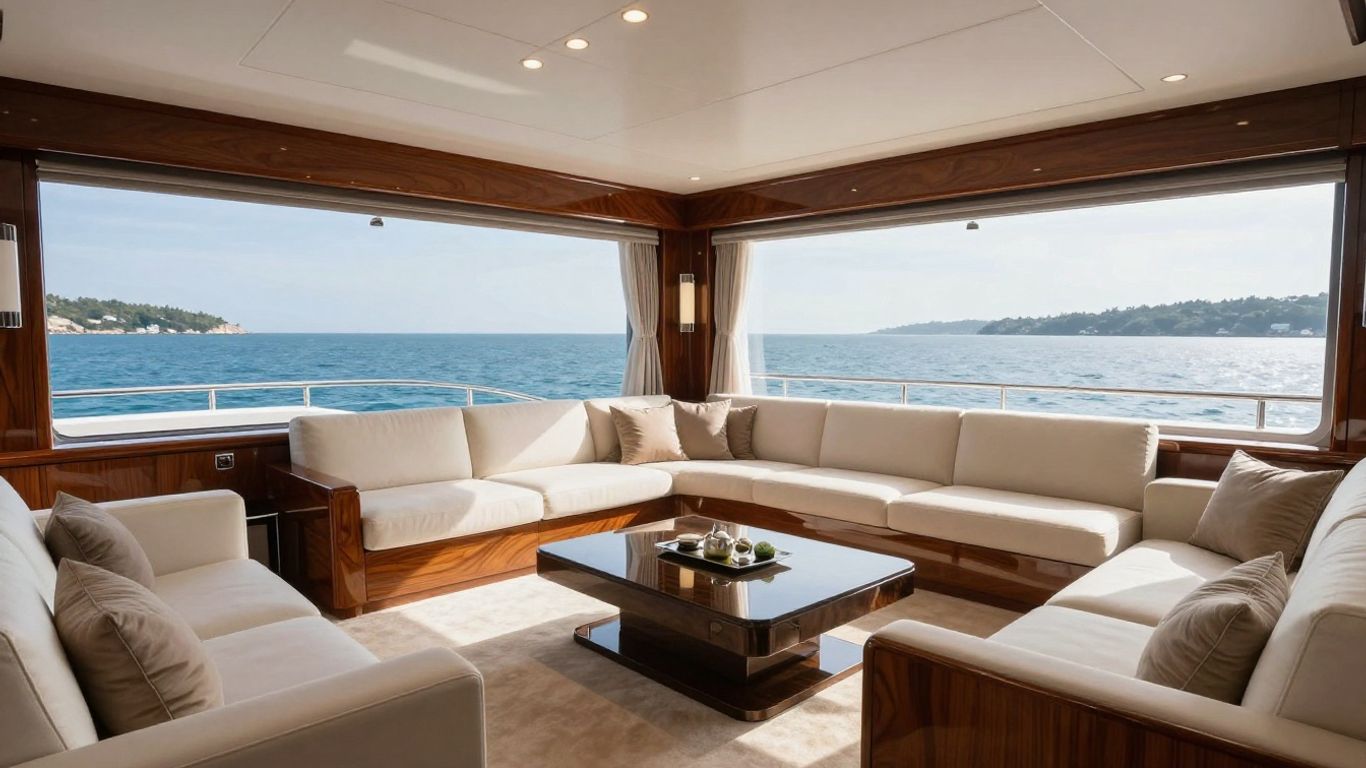
When you’re thinking about the inside of your yacht, it’s all about making every square foot count. Designers really focus on how people will actually use the space. This means thinking about things like how much room you need to walk around comfortably, where the best spots are for natural light, and how to make storage work without making things feel cluttered. The goal is to create an interior that feels both spacious and practical, no matter the size of the yacht. It’s a bit like a puzzle, fitting in all the necessary components – like cabins, bathrooms, and living areas – while still leaving plenty of open space for relaxing and moving around.
Designing For Comfort And Luxury
Comfort and luxury aren’t just about fancy materials, though those definitely play a part. It’s also about how the space makes you feel. Think about things like:
- Ergonomics: Furniture that feels good to sit in for hours, countertops at the right height, and easy-to-reach controls.
- Atmosphere: Lighting that can be adjusted for different moods, good ventilation to keep the air fresh, and soundproofing so you don’t hear too much engine noise.
- Flow: How easily you can move from one area to another. A good layout means you don’t have to squeeze past things or feel like you’re in a maze.
It’s about creating a sanctuary where you can truly unwind and enjoy your time on the water.
Yacht interiors are a careful balance. You want them to look amazing, but they also need to be functional for life at sea. This means choosing materials that are not only beautiful but also durable and easy to maintain, and designing spaces that can handle the movement of the boat and its occupants.
Integrating Technology Seamlessly
Modern yachts are basically floating smart homes, and the floor plan needs to account for all that tech. This isn’t just about having Wi-Fi, though that’s important. It’s about planning for:
- Power and Wiring: Where will all the cables go? You need to plan for charging stations, entertainment systems, navigation equipment, and all the smart home gadgets.
- Control Systems: How will you manage lighting, climate control, entertainment, and security? The floor plan should consider where central control panels or touchscreens will be located.
- Entertainment: Think about where TVs, sound systems, and speakers will fit best for optimal viewing and listening without taking up too much valuable space.
Getting this right from the start means technology enhances your experience without becoming an eyesore or a hassle.
Exploring Different Yacht Layouts
When you start thinking about your dream yacht, the layout is a huge part of it. It’s not just about how many rooms you have, but how those rooms connect and how you’ll actually use the space. There are two main ways designers approach this: open plan or compartmentalized.
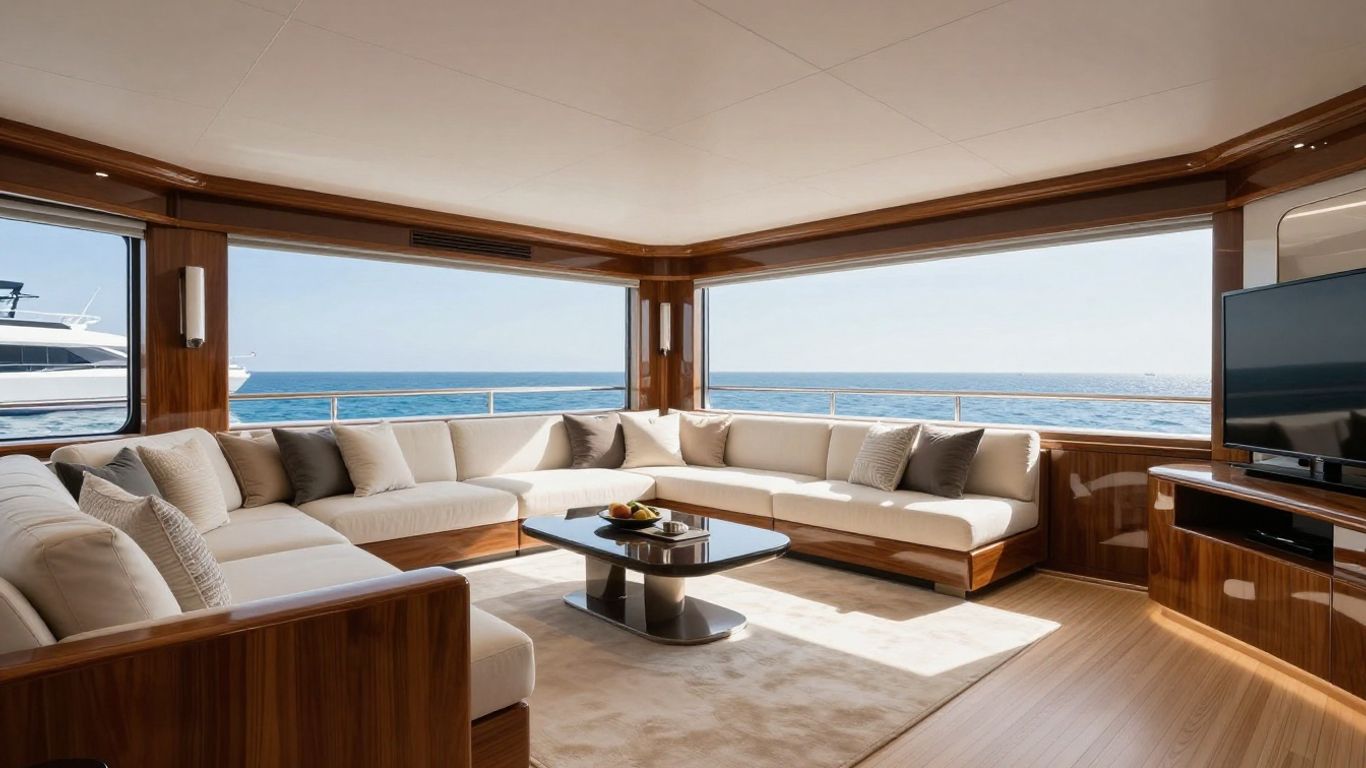
Open plan layouts are pretty popular these days, especially on newer yachts. Think of a big, flowing space where the living room, dining area, and maybe even the galley all sort of blend together. This makes the whole yacht feel much bigger and more social. It’s great for entertaining because everyone can hang out in the same general area. Panoramic windows are often a big feature here, really bringing the outside in and making you feel connected to the sea.
On the flip side, compartmentalized designs break things up into more distinct rooms. This can feel more traditional, offering a sense of privacy and coziness. You might have a separate, formal dining room, a distinct lounge area, and cabins that are truly separate sanctuaries. This approach is good if you like having clear boundaries between different activities or if you often have guests who appreciate their own private space.
Master Suites And Guest Accommodations
No matter the overall layout, the owner’s suite and guest cabins are where comfort and privacy really come into play. The master suite is usually the star, often taking up a prime spot on the yacht, sometimes even on the main deck for the best views. These spaces are designed to be luxurious retreats, with large beds, ample storage, and often private bathrooms that feel more like a spa.
Guest accommodations can vary a lot. You might have several equally sized guest cabins, or perhaps a VIP suite that’s almost as nice as the master. The goal is to make sure everyone feels welcome and has a comfortable place to relax.
Social Hubs And Private Retreats
Beyond just sleeping quarters, a yacht’s layout is all about creating different zones for different moods and activities. The main saloon is often the primary social hub – the place where everyone gathers to relax, dine, or watch a movie. Then there are the exterior decks, which offer fantastic spaces for sunbathing, al fresco dining, or just enjoying the view.
But it’s also important to have private retreats. This could be a quiet library, a small, secluded seating area on deck, or even a dedicated office space. These areas allow you to escape the main social buzz when you need some peace and quiet.
Here’s a quick look at how these areas might be prioritized:
- Social Spaces: Main Saloon, Aft Deck Dining, Flybridge Lounges
- Private Spaces: Owner’s Suite, Guest Cabins, Sky Lounge (can be both)
- Activity Zones: Water Sports Garage, Gym, Cinema Room
The way these different zones are arranged can dramatically change the feel of the yacht. A layout that prioritizes large, open social areas will feel very different from one that emphasizes separate, intimate spaces. It really comes down to how you plan to use your yacht.
Customization And Personalization In Yacht Design
Tailoring Spaces To Your Lifestyle
When you’re dreaming up your perfect yacht, it’s not just about picking a size or a style. It’s about making it truly yours. Think about how you actually plan to use your yacht. Are you all about hosting big parties with lots of friends? Or maybe you prefer quiet, intimate getaways with family? Your daily routine and your hobbies should really shape the layout. For example, if you love water sports, you’ll want easy access to the sea from a spacious swim platform and plenty of storage for gear like kayaks or paddleboards. If you’re a keen chef, a galley that’s more than just a tiny corner might be a priority, perhaps even one that opens up to the main living area. The goal is to create a space that feels like an extension of your home, but on the water.
Bespoke Features And Finishes
This is where the real magic happens. Beyond the basic layout, customization extends to every little detail. We’re talking about the materials used for your countertops, the type of wood for your cabinetry, the fabrics for your upholstery, and even the specific brand of faucets in your bathrooms. You can choose everything from exotic hardwoods and fine Italian leather to durable, low-maintenance composites. Think about lighting too – not just general illumination, but accent lighting to highlight artwork or create a specific mood. Even the technology can be personalized, with integrated sound systems, smart home controls, and entertainment setups tailored to your preferences.
The Impact Of Customization On A Yacht Floor Plan
Customization isn’t just about making things look pretty; it fundamentally changes how a yacht functions. A standard layout might have a fixed dining area, but a custom plan could transform that space into a flexible zone that can be a formal dining room one moment and a casual lounge the next. You might decide to swap a guest cabin for a dedicated home office or a gym. It’s about optimizing every square foot to fit your life. This level of personalization means your yacht won’t just be a boat; it will be a unique reflection of who you are and how you want to live at sea. It’s a big decision, but one that makes all the difference in the long run.
Here’s a quick look at how common areas can be adapted:
| Area | Standard Layout | Customized Option |
|---|---|---|
| Saloon | Fixed seating, central coffee table | Movable furniture, integrated bar, convertible dining |
| Galley | Compact, functional | Larger workspace, island, open-plan connection |
| Master Suite | Standard bed, closet, ensuite | Walk-in closet, private balcony, custom vanity |
| Deck Space | Open deck, seating | Integrated jacuzzi, outdoor kitchen, shaded lounge |
Trends Shaping Modern Yacht Floor Plans
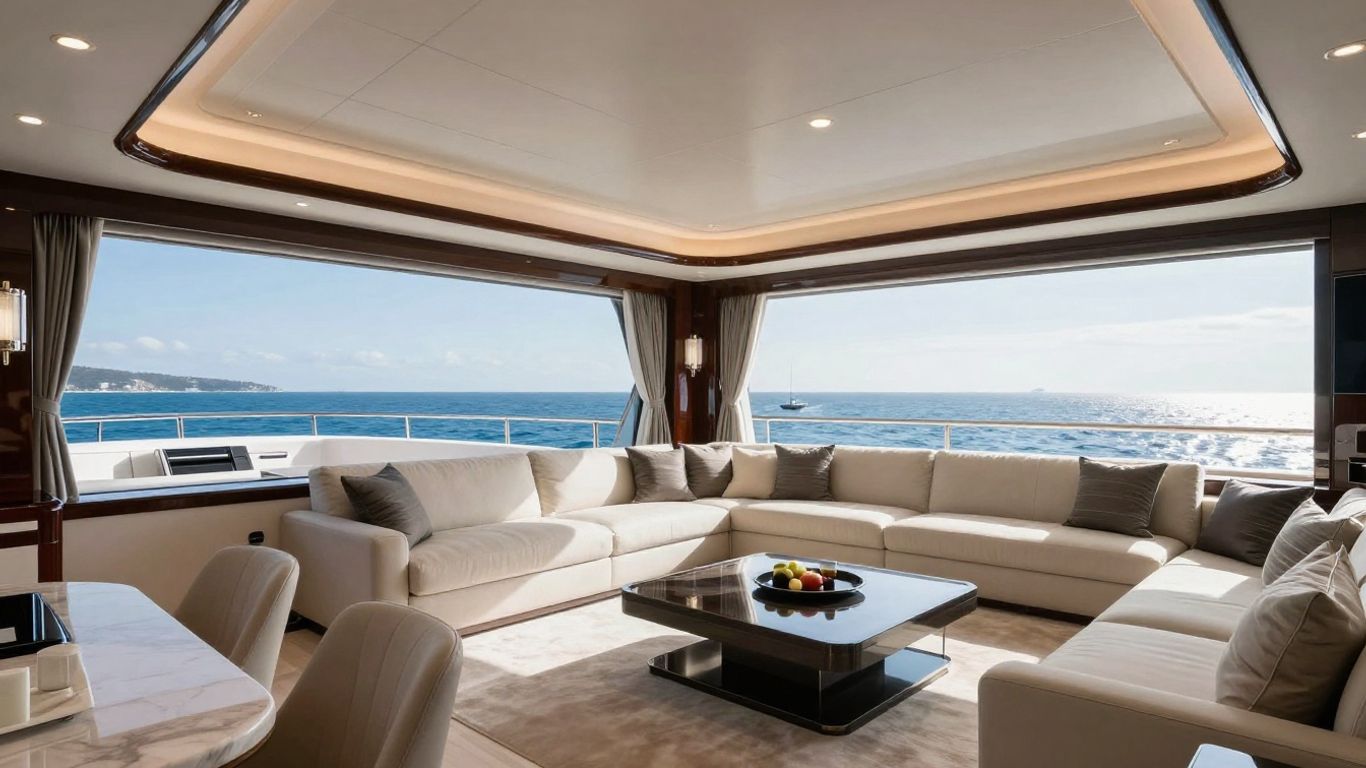
The world of yacht design isn’t static; it’s always moving forward, and right now, a few big ideas are really changing how we think about the inside of these floating homes. It’s not just about looking good anymore, though that’s still important. People want yachts that are kinder to the planet, smarter, and more adaptable to whatever life throws their way.
Sustainable And Eco-Conscious Layouts
This is a huge one. Builders and owners are increasingly looking for ways to minimize their footprint on the water. That means thinking about layouts that work with greener technologies. You might see more integrated solar panels on deck surfaces that feed into the yacht’s power system, or floor plans designed to accommodate hybrid or electric propulsion systems more efficiently. It’s about making sure the luxury doesn’t come at a steep environmental cost. Think about spaces designed for water recycling systems or waste management that’s more responsible. The goal is to enjoy the ocean without harming it.
Smart Yacht Integration
Forget just having a TV and a stereo. Modern yachts are becoming high-tech hubs. Floor plans are now designed with the future of connectivity in mind. This includes:
- Dedicated spaces for advanced navigation and control systems.
- Integrated smart home technology for lighting, climate, and entertainment, all controlled from a tablet or phone.
- Robust Wi-Fi and satellite communication infrastructure built into the very structure.
- Automated systems for everything from stabilizing the yacht at anchor to managing power consumption.
It’s about creating a seamless, connected experience, almost like a luxury apartment on the water, but with a lot more tech.
Flexible And Multifunctional Spaces
People are realizing that a yacht isn’t just for one thing. It’s a place for relaxation, for entertaining, for work, and sometimes even for adventure. So, floor plans are becoming more adaptable. We’re seeing more designs that can transform. A dining area might cleverly convert into a lounge, or a guest cabin could double as a home office. Think about:
- Sliding partitions that can open up or close off areas.
- Furniture that can be reconfigured or stored away.
- Multi-purpose rooms that serve different functions depending on the time of day or the owner’s needs.
The drive towards flexibility means designers are really thinking outside the box, making sure every square foot serves multiple purposes without feeling cramped or compromised. It’s about maximizing usability for a diverse range of activities.
These trends aren’t just fads; they represent a significant shift in how yachts are conceived and built, focusing on a more responsible, connected, and adaptable future for life at sea.
The Yacht Design Process: From Concept To Reality
So, you’ve got this amazing idea for a yacht, a floating palace that perfectly fits your dreams. But how do you actually get from that spark of inspiration to a real, tangible vessel on the water? It’s quite a journey, and it involves a lot of steps and people working together. Think of it like building a house, but way more complex and on the water.
Translating Vision Into A Yacht Floor Plan
It all starts with your vision. You’ll sit down with designers and naval architects, talking about what you want. What kind of trips will you take? How many people will be on board? What’s your style – modern and sleek, or classic and grand? This initial chat is super important because it’s where the first sketches and ideas start to form. They’ll take your thoughts and turn them into preliminary drawings and 3D models. This is where you see your dream start to take shape on paper, or more likely, on a screen. This conceptual phase is all about making sure the floor plan truly reflects your lifestyle and desires.
Collaboration With Designers And Architects
This isn’t a solo mission. You’ll be working closely with a team. You’ve got the designers, who focus on the look and feel, the layout, and the luxury aspects. Then there are the naval architects, the brains behind how the boat actually floats, moves, and stays stable. They figure out the engineering, the hull shape, and all the technical stuff that keeps everything safe and performing well. It’s a constant back-and-forth. You might love a certain look, but the architect might point out how it affects stability or performance. Finding that balance is key. You’ll be reviewing plans, giving feedback, and making decisions at each stage. It’s a partnership aimed at creating something truly special.
Navigating Challenges In Yacht Layout
Of course, it’s not always smooth sailing. There are always challenges. Sometimes, what looks great on paper doesn’t quite work in reality due to space constraints or structural needs. Regulations also play a big part; you can’t just build anything you want. Safety standards and engineering requirements mean certain design choices might be limited. For example, fitting all the necessary equipment, like engines, tanks, and systems, into a sleek hull while still leaving plenty of room for living spaces can be tricky. It requires clever problem-solving and sometimes, a bit of compromise. The goal is to overcome these hurdles to create a yacht that is both beautiful and highly functional, a true testament to the boat design process.
Here’s a look at the typical stages:
- Concept Development: Initial ideas and client requirements are gathered.
- Preliminary Design: Sketches, 3D models, and basic layouts are created.
- Detailed Design: Engineering plans, construction drawings, and material specifications are finalized.
- Construction: The yacht is built based on the detailed plans.
- Sea Trials: The finished yacht is tested on the water.
Building a yacht is a marathon, not a sprint. Patience and clear communication with your design team are your best tools for turning that dream into a reality on the waves.
Bringing Your Dream Yacht to Life
So, we’ve looked at how yacht floor plans can be super flexible, from stock designs you can tweak a bit to fully custom builds that are all about you. It’s pretty wild how much goes into making a yacht, balancing looks with how it actually works out on the water. Whether you’re just dreaming or seriously planning, remember that talking to designers is the way to go. They’re the ones who can take your ideas and turn them into a real boat that you’ll love.
Frequently Asked Questions
What is a yacht floor plan and why is it important?
A yacht floor plan is like a blueprint for the inside of a boat. It shows where all the rooms, like bedrooms, bathrooms, and living areas, will be. It’s super important because it helps make sure the boat is comfy, looks good, and has everything you need for a great trip on the water.
How do designers decide where to put rooms on a yacht?
Designers think about how you’ll use the yacht. They try to put the most important rooms where they make sense and make sure there’s enough space for everyone to move around easily. They also consider the shape of the boat’s body, called the hull, because it affects how the rooms can fit inside.
What are the main parts of a yacht's inside layout?
Key parts include making the most of the space, designing comfy and fancy areas for relaxing and sleeping, and adding cool technology that works well. Think of big, open living rooms, cozy private bedrooms, and smart systems that control lights and entertainment.
Are there different styles of yacht layouts?
Yes! Some yachts have an ‘open plan’ where spaces flow into each other, making it feel big and airy. Others are more ‘compartmentalized,’ with separate rooms for more privacy. You’ll also find special areas like big master bedrooms and spots for guests to hang out.
Can I change the layout to fit my own style?
Absolutely! Customizing is a big part of yacht design. You can work with designers to make the rooms fit your lifestyle perfectly, choose your favorite colors and materials, and add special touches that make the yacht uniquely yours.
What new ideas are showing up in yacht floor plans today?
Designers are focusing on being eco-friendly, using smart technology to make things easier, and creating spaces that can be used for many different things. For example, a dining area might also be a place for games, or a lounge could turn into a movie room.