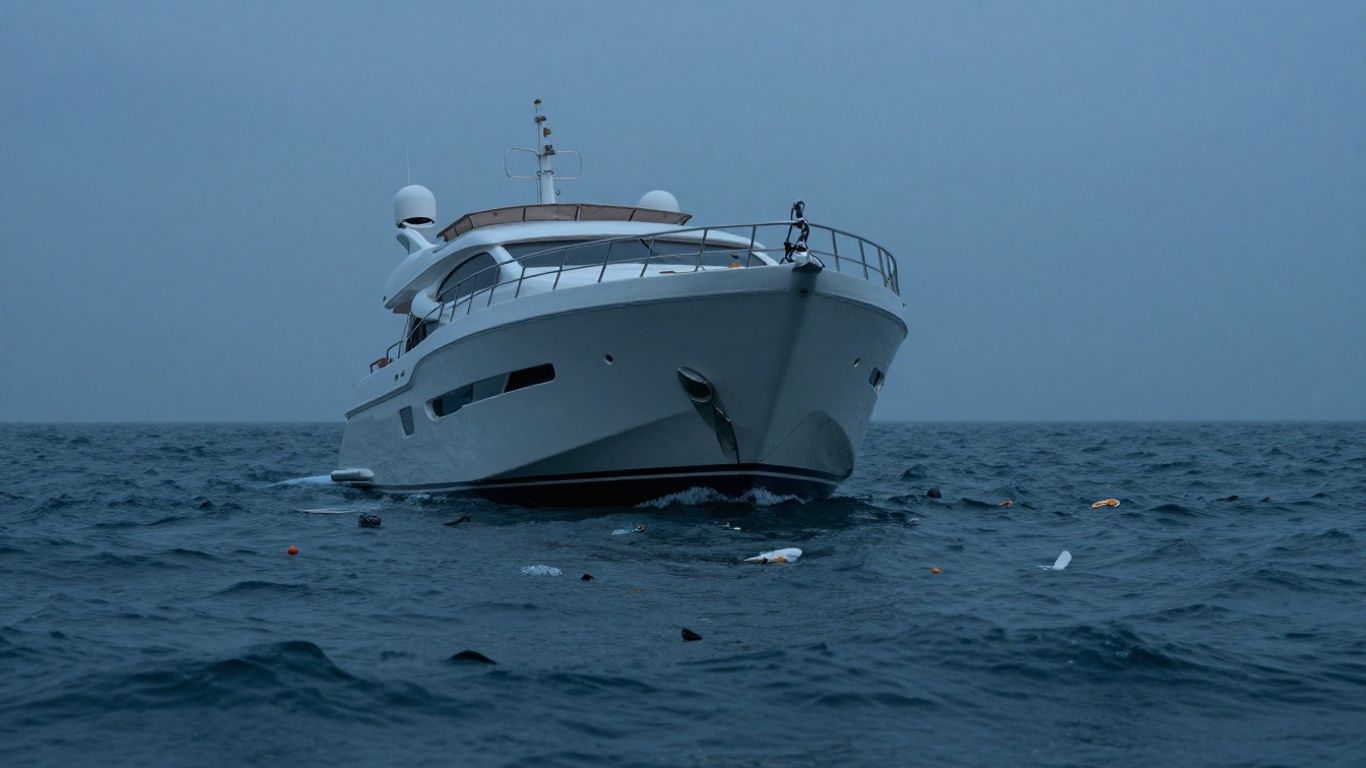
It’s a tough story to read about, but luxury yacht sinkings do happen. We’ve seen some recent incidents that really make you think. This article takes a look at what went wrong in those situations and, more importantly, what we can do to stop it from happening again. Because nobody wants to hear about another beautiful boat going down.
Key Takeaways
- The ‘Bayesian’ luxury yacht sank incredibly fast, taking less than 15 seconds to heel over irrecoverably, according to an initial report. This rapid sinking led to a tragic loss of life.
- Sudden, severe weather, like intense wind gusts from storms, played a major role in the sinking. The yacht’s stability information didn’t show how vulnerable it was to these conditions when moving.
- During the sinking, escaping the yacht was extremely difficult. People were trapped, and launching safety equipment like liferafts faced major challenges.
- Rescue efforts quickly turned into recovery operations due to the depth and location of the sunken yacht, complicating the process of finding those lost.
- Lessons learned highlight the need for accurate stability data, crew awareness of weather dangers, and better ways to monitor weather conditions to prevent future luxury yacht sink incidents.
Understanding the Bayesian Sinking Incident
The sinking of the luxury yacht Bayesian was a sudden and tragic event that unfolded with terrifying speed. The Marine Accident Investigation Branch (MAIB) released an interim report detailing the sequence of events, and it paints a stark picture of how quickly things can go wrong at sea. The yacht heeled over to a devastating 90 degrees in less than 15 seconds, a moment that marked the irreversible point of no return.
The MAIB's Interim Report Findings
The MAIB’s initial findings highlight several key points about the Bayesian incident. It’s important to remember that this is an ongoing investigation, and more details might come out later, especially if the wreck can be examined more closely. However, what’s clear is that the yacht was caught in severe weather conditions.
- The report suggests that certain vulnerabilities in the yacht’s stability, particularly when motoring with the centerboard raised and sails down, were not clearly documented in the onboard stability information. This meant the crew and owner might not have been fully aware of the risks.
- A gusting wind speed exceeding 63.4 knots, under specific conditions (motoring, sails down, centerboard up, 10% consumables), could lead to the vessel capsizing. The yacht was in a load state where, once it heeled past 70.6 degrees, there was no chance of recovery.
- The weather forecasts leading up to the incident predicted intense rain and thunderstorms, with the potential for strong wind gusts. Atmospheric conditions were noted as being borderline for the development of supercells.
Timeline of the Tragic Events
The events leading up to and during the sinking happened very quickly. The Bayesian had been anchored near Cefalù, Sicily, but due to increasing winds and a forecast for storms, the decision was made to move to Porticello for shelter.
- 21:24: Bayesian anchors. Seas are calm, wind is light. Thunderstorms are visible in the distance.
- 01:00: Anchor watch continues, wind remains light.
- 04:06: The yacht violently heels to starboard, taking less than 15 seconds to reach a critical angle. Generators shut down, emergency lights activate.
- 04:22: EPIRB is launched. Survivors are in the water or on the hull.
- 04:24: The first liferaft is inflated and boarded. Survivors witness the yacht’s bow rise and then sink.
The chaos and darkness following the violent heel made escape incredibly difficult. People and objects were thrown around, and water quickly entered the internal spaces through stairwells. Getting to safety and launching emergency equipment became a desperate race against time and the sinking vessel.
Eyewitness Accounts of the Sinking
Accounts from survivors paint a harrowing picture of the final moments. People were injured by falling debris, swept into the sea, or trapped in air pockets. The swiftness of the sinking meant that not everyone could escape the rapidly flooding interior.
- Some guests and crew had to use improvised methods, like drawers from furniture, to climb out of cabins and into the saloon as water poured in.
- The Chief Officer described having to dive through water to open aft saloon doors to escape.
- The skipper organized the abandonment from the flying bridge, instructing those present to swim clear of the mast and boom as the yacht went down.
Launching safety equipment was also a challenge. While one EPIRB was activated, attempts to release liferafts were difficult, with some crew members having to manually release one from the sinking vessel. The speed at which the Bayesian sank left little time for organized evacuation, turning a planned overnight anchorage into a desperate fight for survival.
Factors Contributing to the Luxury Yacht Sinking
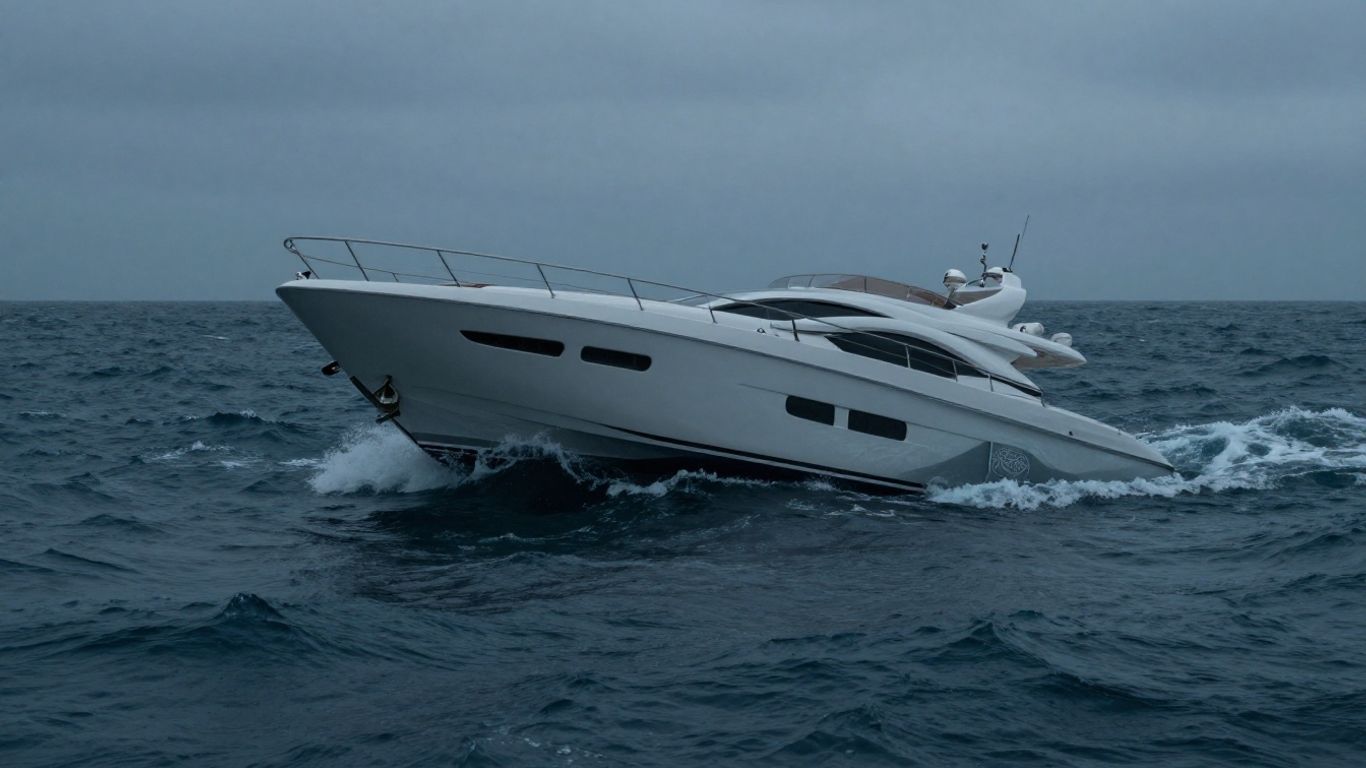
It wasn’t just one thing that led to the "Bayesian" going down so fast. The MAIB report points to a few key issues that, when they all lined up, created a perfect storm, so to speak.
The Role of Approaching Storms
Forecasting was a big part of the picture. The yacht was anchored, but the weather was changing. Thunderstorms were on the horizon, and the crew was watching the wind. They had a plan to move if the wind picked up past 20 knots. It seems like the storm that hit was more intense and came on faster than expected. The report mentions "supercells," which are basically isolated, powerful storms that can bring really strong winds, sometimes over 175 knots. These aren’t your average summer showers; they’re the kind of weather that can really test a vessel.
Vulnerabilities Not Identified in Stability Information
This is a pretty serious point. The yacht had a "Stability Information Book," which is supposed to tell the crew and owners about the boat’s limits. But, according to the MAIB, this book didn’t mention a critical vulnerability. Under certain conditions – specifically, when the yacht was motoring, sails down, centerboard up, and with about 10% of its fluids on board – a wind gust over 63.4 knots could cause it to capsize. Even worse, if the boat heeled over past 70.6 degrees, there was no coming back. This information wasn’t in the book, meaning the crew and owner likely had no idea this specific danger existed.
The Impact of Wind Speed and Yacht Stability
When that intense storm hit, it seems the wind speed played a direct role in the yacht’s stability, or lack thereof. The report suggests that a gust exceeding 63.4 knots, hitting the yacht’s side, could have been the trigger. Once the yacht reached that 70.6-degree heel angle, it was past the point of no return. It went from upright to capsized in less than 15 seconds. It’s a stark reminder that even large, luxurious vessels have specific limits, and pushing those limits, especially when combined with unexpected weather, can have devastating consequences.
The speed at which the yacht listed was astonishing. Within seconds, everything not secured was thrown around, and the generators cut out. This rapid loss of stability meant there was very little time for anyone to react or even understand what was happening before the situation became dire.
The Critical Moments of the Sinking
It all happened incredibly fast. One minute, things were relatively calm, and the next, the yacht was violently tilting. Reports indicate the vessel heeled over to a staggering 90 degrees to starboard in less than 15 seconds. Imagine that – a massive yacht going from upright to on its side in the time it takes to blink.
During this chaotic event, people and loose items went flying. The generators cut out, plunging the yacht into darkness, with only the battery-powered emergency lights kicking in. It was a terrifying scene, with injuries reported from people being thrown around or hit by falling objects. Some guests and crew found themselves in a desperate scramble to get out of flooded areas.
The Violent Heel and Rapid Sinking
The initial, extreme tilt was the point of no return. Water started pouring over the starboard rails, and within moments, it was rushing into the interior spaces through stairwells. There was no warning of flooding until it was already happening. The speed at which the yacht began to take on water was astonishing, making any organized response incredibly difficult.
Escape from Flooded Interior Spaces
People were trapped in various parts of the yacht as water levels rose. Some had to use furniture, like drawers that had slid out, as makeshift ladders to climb their way to safety. Others found themselves in air pockets, needing help from those outside to open doors and escape. The Chief Officer even had to dive through cascading water to open doors and get clear of the vessel. It was a true test of quick thinking and sheer will to survive.
Challenges in Launching Safety Equipment
Getting the safety equipment deployed was another major hurdle. While one EPIRB was activated early on, launching the liferafts proved difficult. In the midst of the chaos and the yacht’s rapid sinking, crew members struggled to release them. At one point, a liferaft was successfully released and towed to survivors, but not without significant effort and risk.
The sheer speed of the event meant that there was very little time for anyone to react. The transition from a stable vessel to one that was sinking was almost instantaneous, leaving little opportunity for a calm and orderly evacuation.
Here’s a breakdown of the timeline during these critical moments:
- 04:06: The yacht violently heels to starboard, reaching 90 degrees in under 15 seconds.
- Immediately following the heel: Generators fail, emergency lights activate, and water begins entering the interior.
- Ongoing: Crew and guests attempt to escape flooded compartments and reach safety.
- Later: Efforts are made to launch liferafts amidst the sinking.
- 04:24: The first liferaft is inflated and boarded by survivors.
Rescue and Recovery Operations
Sea Rescue and Dive Team Efforts
When the Bayesian went down, the immediate aftermath was a frantic scramble for survival. Those who could get out of the sinking yacht swam for their lives, some clinging to floating debris. The Italian Coast Guard and other maritime services were quickly on the scene, launching a massive rescue effort. This involved numerous boats and, as time went on, a significant number of dives. Reports mention over 123 dives were conducted by the Italian fire brigade alone, using both divers and robotic equipment to search the waters and the submerged vessel. The transition from a rescue mission, focused on saving lives, to a recovery operation, aimed at retrieving those lost, is always a somber and difficult phase.
The Transition from Rescue to Recovery
Initially, the priority was clear: find and save anyone still alive. However, as hours turned into days, the grim reality set in. The focus shifted to locating and bringing ashore the individuals who had not survived. This phase is emotionally taxing for everyone involved, from the families waiting for news to the rescue teams themselves. It requires a different kind of methodical approach, often involving detailed mapping of the seabed and careful planning for each dive.
Complications Due to Hull Depth and Position
Recovering the yacht and its occupants wasn’t straightforward. The Bayesian ended up resting on the seabed at a considerable depth, around 50 meters (about 164 feet), and not too far from the shore. This depth presents significant challenges for dive teams, limiting the time divers can spend safely underwater and increasing the complexity of the operation. The exact position of the hull also played a role, potentially making access more difficult. Operations like these often require specialized equipment and highly trained personnel to manage the risks associated with deep-water recovery. The challenges faced here are not unique to this incident; similar issues arise when large vessels sink in accessible, yet still deep, waters, making the recovery of damaged boats a complex task.
Lessons Learned from Luxury Yacht Incidents
Looking back at what happened with the Bayesian and other similar events, a few things really stand out. It’s not just about having a fancy boat; it’s about knowing how it behaves and being ready for trouble.
The Importance of Accurate Stability Data
This is a big one. The reports show that sometimes, the information owners and captains have about how stable their yacht is, especially under different conditions, isn’t quite right. It’s like trying to build something without knowing the exact weight of your materials. The Bayesian incident highlighted how quickly a yacht can go from upright to on its side, in less than 15 seconds, when stability limits are exceeded. This suggests that the actual stability might have been less than what was assumed, or the conditions it encountered were more extreme than anticipated.
- Stability Curves: These diagrams show how much a boat will heel (tilt) with different forces acting on it. They need to be accurate and account for all the yacht’s equipment, fuel, water, and even people onboard.
- Dynamic Stability: This is about how a boat recovers after being hit by a wave or wind. It’s not just about being stable when sitting still.
- Load Conditions: Yachts change weight constantly. How much fuel is left, how much water is in the tanks, and where people are standing all affect stability. This needs to be tracked.
The idea that a yacht could capsize so rapidly, taking everyone and everything with it, is pretty sobering. It points to a gap between theoretical stability and real-world performance when things go wrong.
Crew Awareness of Potential Hazards
It seems like sometimes, the crew might not fully grasp the risks they’re facing, especially when the weather turns. In the Bayesian case, they were moving to a safer harbor due to a forecast storm, but the storm’s intensity and speed might have caught them off guard. It’s not enough to just see lightning in the distance; you need to understand what that means for your specific vessel.
- Weather Interpretation: Understanding how forecasts translate into actual sea conditions for a yacht of a particular size and design.
- Situational Awareness: Constantly assessing the environment – wind, waves, current, and the yacht’s own behavior.
- Risk Assessment: Being able to identify potential dangers and decide on the best course of action, even if it means changing plans last minute.
The Need for Robust Weather Monitoring
This ties into the previous point. Relying on just a basic forecast might not be enough, especially in areas known for sudden, severe weather changes. Modern technology can help, but it needs to be used effectively.
- Multiple Sources: Using several weather services and radar to get a clearer picture.
- Real-time Data: Having access to live wind speed, wave height, and barometric pressure readings.
- Communication: Making sure the captain and crew are all on the same page regarding weather updates and potential threats.
Preventing Future Luxury Yacht Sinkings
It’s a tough pill to swallow, but incidents like the Bayesian sinking show us that even the most luxurious vessels aren’t immune to disaster. We’ve seen how quickly things can go wrong when the weather turns nasty and the yacht’s stability isn’t fully understood. So, what can be done to stop this from happening again?
Enhanced Safety Protocols for Yachts
First off, we need to make sure the safety plans on these big boats are top-notch. This isn’t just about having life jackets; it’s about having detailed procedures for all sorts of emergencies, from sudden storms to equipment failures. Think of it like a fire drill, but for the whole yacht.
- Develop clear, step-by-step emergency action plans for various scenarios. This includes specific instructions for crew on how to react to different types of weather events, system malfunctions, or hull breaches.
- Regularly review and update these protocols based on new information from incidents and advancements in safety technology.
- Ensure all crew members are familiar with their roles and responsibilities during an emergency, not just the senior officers.
Regular Maintenance and Inspections
This is a big one. A yacht is a complex machine, and like any machine, it needs regular check-ups. We’re talking about more than just a quick wash and polish. It means getting into the nitty-gritty of the hull, the engines, the electrical systems, and especially the stability equipment.
| Component | Inspection Frequency | Key Checks |
|---|---|---|
| Hull Integrity | Annually | Check for cracks, corrosion, and any signs of stress or damage. |
| Stability Systems | Bi-Annually | Verify operation of ballast systems, centerboard (if applicable), etc. |
| Bilge Pumps & Alarms | Monthly | Test pumps and ensure alarm systems are functioning correctly. |
| Safety Equipment | Quarterly | Inspect life rafts, life jackets, flares, and communication devices. |
| Weather Monitoring Gear | Weekly | Calibrate and test all onboard weather instruments and communication systems. |
Importance of Crew Training and Preparedness
Honestly, the best equipment in the world is useless if the crew doesn’t know how to use it or react properly. Training needs to go beyond the basics. Crew members should be drilled on how to handle unexpected situations, understand the yacht’s specific vulnerabilities, and know how to work together effectively when things get hairy.
The stability information provided with a yacht is supposed to be a reliable guide, but it needs to be accurate and reflect the real-world conditions the vessel might face. If that information is flawed or incomplete, it’s a ticking time bomb. Crew need to be aware of the limitations of this data and have the training to recognize when something isn’t right, even if the books say otherwise.
It’s about building a culture of safety where everyone, from the captain to the newest deckhand, feels responsible for the well-being of the vessel and everyone on board. This means constant learning, open communication, and a commitment to being ready for anything the sea might throw at them.
Looking Ahead: What Can We Learn?
It’s a tough pill to swallow when these beautiful vessels end up at the bottom of the sea. The recent incidents, like the tragic sinking of the Bayesian, really hit home how quickly things can go wrong, even for experienced crews. Reports show that sometimes, these boats can capsize in less than 15 seconds, which is just terrifying to think about. It seems like understanding a yacht’s specific limits, especially in unexpected weather, is super important, and maybe not always clear from the books onboard. We’ve seen how fast storms can pop up and change the game on the water. Hopefully, by talking about these events and looking at the details, we can all get a better sense of what to watch out for and how to stay safer out there. It’s a reminder that even with all the luxury, the sea is still a powerful force we need to respect.
Frequently Asked Questions
What happened to the luxury yacht Bayesian?
The luxury yacht Bayesian sank very quickly off the coast of Sicily in August 2024. It happened during the night, and a sudden, strong storm played a big role. Sadly, seven people lost their lives in this terrible event.
What caused the yacht to sink so fast?
An unexpected and powerful storm hit the yacht. Reports suggest that a strong gust of wind caused the yacht to tilt over very suddenly, in less than 15 seconds. This extreme tilt made it impossible to stop, and the yacht filled with water and sank.
Were there warning signs before the storm hit?
The yacht was anchored, and the crew was watching the weather. They were aware that thunderstorms were possible. However, the storm that hit was much more severe and came on faster than expected, catching them by surprise.
What are 'stability information books' and why are they important?
These books contain important details about how a boat will behave in different conditions, like how much it can tilt before it becomes unstable. For the Bayesian, it seems the book didn’t show a hidden danger: how easily the yacht could capsize in certain wind conditions when it was moving.
How did the rescue and recovery efforts go?
Rescue teams worked hard to save survivors. When it became clear that some people were lost, the mission changed to recovering those who had passed away. The deep water and the position of the sunken yacht made this very difficult.
How can similar accidents be prevented in the future?
To stop this from happening again, several things are important. Yacht owners and crews need to have the most accurate information about their boat’s stability, always keep a close eye on the weather, and make sure the crew is well-trained to handle emergencies and understand potential dangers.